Top 5 Roofing Trends Transforming Homes In 2026
The solar-powered integration of smart material -innovations that are changing the way an roof can provide for your home and your pocket
In the majority of its time roofing had a simple purpose: to keep weather out. It was rated on the durability, watertightness, as well as cost — a practical criterion for a structural part which most homeowners would prefer not to consider unless something occurred to be wrong.
The era of passive, only functional roofing is coming to an end. In 2026 the roof will be reinvented as among the technologically efficient and financial-impacting surfaces on homes — creating electricity, regulating temperatures inside as well as managing stormwater, revealing its health status and enhancing the home’s energy independence as well as the value of its market.
In the wake of advances in technologies in the field of materials, decreasing costs for renewable energy, accelerating construction code requirements pertaining to the climate, as well as a growing generation of homeowners who are expecting their homes to perform better and more efficiently, the roofing industry is undergoing a rate of technological innovation that it’s never before.
If you’re contemplating a replacement of your roof or building a brand new home or just trying to determine what the future holds for the industry the five trends listed below represent the most radical forces shaping residential roofing by 2026.
1. Solar Roofing Integration Goes Mainstream
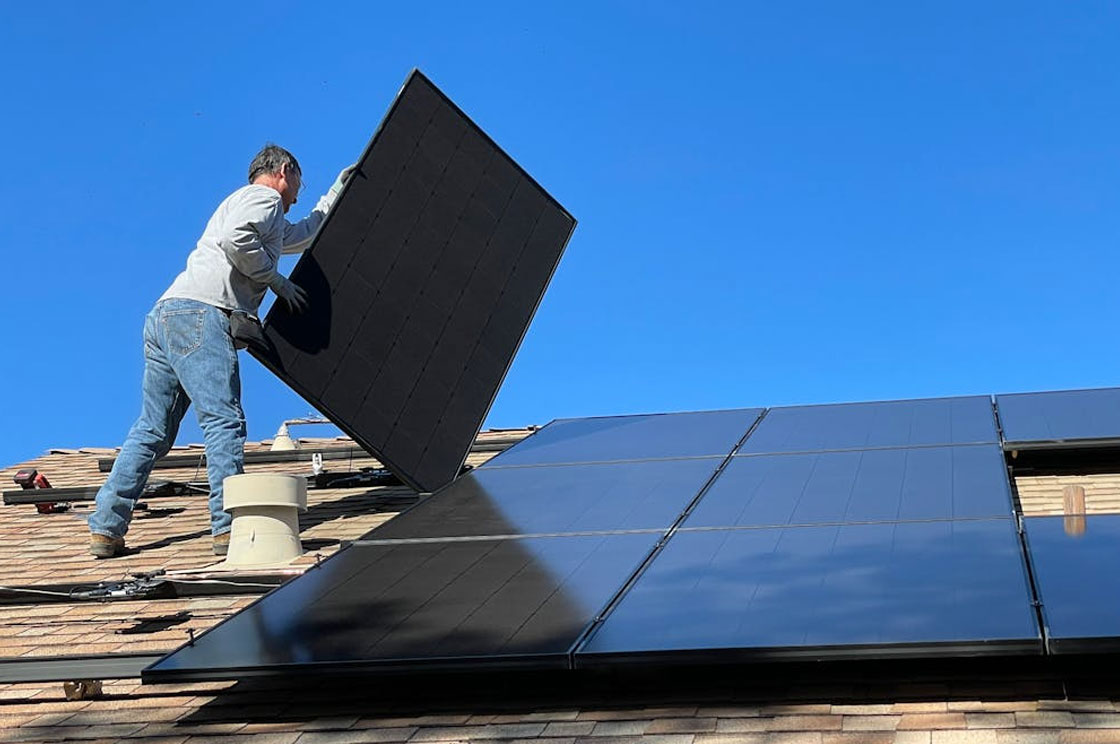
Solar roofing has shifted from being a costly novelty to an option that is financially viable in 2026. And the technology behind this transformation is no longer limited by Tesla’s Solar Roof. A variety of companies such as GAF Energy with its Timberline Solar shingles, CertainTeed with its Apollo integrated solar tiles and many other emerging competitors have brought solar-integrated roofing solutions to market with prices and installation patterns that allow them to be used by the vast majority of homeowners than the first-generation models would be able to achieve.
The main benefit of solar-integrated roofing over traditional roof-on-panel systems is structural and aesthetic as opposed to putting heavy, hardware-laden panels on the existing roof, solar roofing can replace the roof’s cover by using photovoltaic-enabled shingles and tiles that look and feel like traditional roofing materials on the street. This removes aesthetic concerns which have historically slowed solar installation in aesthetically-focused communities and in HOA-controlled neighborhoods.
The economic case for solar is stronger than ever before as the Federal Investment Tax Credit remains at thirty percent through 2032. net meters allow homeowners to sell surplus generation into the grid a majority of states, and homes that have integrated solar roofs are attracting significant premiums on the resales market.
For homeowners who will need a replacing their roof in the year 2026 price of replacing the roof as well as traditional solar installations increasingly will be similar to the price of a solar roof that is integrated which makes the price of the comparison better than ever before.
2. Cool Roofing Materials Are Redefining Energy Efficiency
The summer temperatures across a large portion part of United States and globally reach new levels with alarming frequency Cool roofing -products designed to reflect more sunlight and take less heat than traditional roofing materials is moving from a niche, commercially-focused application to becoming a popular residential choice.
The technology behind cool roofing is simple traditional roofing made of dark asphalt absorbs from seventy to ninety percent of the sun’s radiation and transform it into heat that increases temperatures in attics and increases cooling loads and increases the cost of energy in summer.
Cool roofing materials include reflective asphalt shingles, with special granule coatings metal roofing that has reflective solar panels as well as light-colored concrete and clay tile, as well as thermoplastic single-ply membranes that are used on flat roofs reflect significantly more of solar radiation, which can reduce temperatures in the attic by about 30 degrees Fahrenheit, and reducing cooling energy usage by 10 to 15% in hot temperatures.
The most important development in the field of cool roofing for 2026 is the development of thermochromic roofing materialsadvanced coatings that can dynamically adjust their solar reflectance on the ambient temperature, increasing the reflection of heat in summer, and minimising it in winter, to allow passive heating.
A number of manufacturers are bringing thermochromic shingles to the market of residential properties in 2026, which is an important improvement over the static reflectance characteristics of traditional cool roofing. Energy Star certification for cool roofing materials, in conjunction with the growing incentive programs at the state level and revised building codes for hot regions that require minimum reflectance requirements, is increasing the adoption of thermochromic shingles across homes.
3. Smart Roofing Technology Brings Predictive Maintenance to the Residential Market
A major and significant and least noticeable roofing trends in 2026 will be the rise of smart roofing technologies that transforms a traditional structural element into a continuously monitored and data-generating system capable of detecting and preventing problems before they turn into costly breakdowns.
Smart roofing systems include wireless sensor networks that are embedded in or under the roofing structure which continuously monitor the conditions, including the infiltration of moisture as well as structural load, thermal performance due to wind and snow and the micro-vibration patterns that are associated with hail impacts and material degrading.
These data are sent to applications that are accessible to homeowners and, in some instances directly to roofing contractors that offer monitoring service agreementspermitting issues to be detected and dealt with at a minimal repair stage instead of the stage of failure that usually follows decades of undetected water intrusion. Insurance companies are being observant: major insurance companies for homeowners are now offering reduced premiums for homes that have monitored smart and certified roofs acknowledging that early detection decreases the amount and frequency of claims.
Roof inspection using drones which has seen significant advancements on the industrial roofing field is now entering the residential market via roofing companies that use drone imagery paired and AI analysis tools to provide precise condition assessments, without the risks to safety and accessibility limitations of physical roof inspections. For homeowners this means more frequent precise, more reliable, and less expensive evaluations of the condition of their roof and fundamentally altering the costs of roofing maintenance.
4. Sustainable and Recycled Roofing Materials Gain Serious Market Share
The environmental profile of conventional asphalt shingles has long been a concern among sustainability-oriented homeowners and building professionals: the typical asphalt shingle roof consumes petroleum-based materials in its production, has a lifespan of fifteen to thirty years, and at end of life generates approximately eleven million tons of shingle waste annually in the United States alone — the majority of which ends up in landfills.
In 2026, an expanding selection of alternatives are beginning to gain significant market share, delivering equivalent or superior performance and drastically more sustainable qualities. Synthetic roofing materials comprised of composite shingles made using recycled plastic, rubber and wood fiber perform exceptionally well compared to asphalt in every pertinent dimension.
They provide the Class 4 rating for impact resistance which qualify for insurance discounts in areas prone to hail, 50-year warranty from the manufacturer that is far superior to the standard asphalt, and last-minute recycling that removes landfill emissions.
Recycled slate and clay tiles that are used in demolition projects and then repurposed for reuseare seeing a growing market with homeowners who appreciate their historic authenticity as well as the environmental benefits of prolonging the life of their existing materials.
Metal roofing, which is made with significant recycled content and completely recyclable at the its end of life, is continuing its rapid growth because homeowners are aware the long-term benefits of its 50+ year lifespan. can amortize the higher initial expense into lower annual cost than a series of asphalt roof replacements in the same time.
5. Climate Resilience Engineering Becomes a Baseline Expectation
One of the most significant changes of residential roofing that will take place by 2026 will be the rise in climate resistance from an upgrade option to a standard expectation triggered by the increasing frequency and severity of extreme weather events, quickly developing building codes, as well as an insurer that’s becoming not willing to insure roofing systems that don’t meet the requirements for enhanced resilience.
The data behind this trend are awe-inspiring the insured losses resulting due to hail and wind damage to roofs on residential properties have risen significantly over the last decade and insurance providers who are most impacted areas have responded by requiring specific roofing materials as well as impact resistance ratings and installation requirements as conditions of insurance coverage. Impact-resistant shingles in Class 4 are the highest grade in the UL 2218 standard, which is designed to withstand the force of large hail hits without losing or cracking granules.
They are required to be covered in certain high-risk areas and are eligible for discounts on insurance premiums of between 20 and 30 percent in other markets which is a financial incentive that has accelerated their use beyond the regions in which they are required.
Apart from hail-resistant, this emphasis of climate resilience has led to investments in improved roof-to-wall connections which improve the wind uplift resistance in regions that are susceptible to hurricanes, enhanced water shield and ice specifications that guard against the infiltration of ice dams when in cold climates, and the requirements for attachment of roof decks that have been proven to significantly reduce loss of roof during storms with high winds.
The most forward-looking homeowners who are considering the replacement of their roof in 2026 are looking at their new roof, not only against the current weather conditions but also against more extreme weather conditions that climate projections suggest will be prevalent in their region over the next 30 years.
Your Roof Is an Investment — Treat It Like One
The five trends that are shaping residential roofing in 2026 have one common thread: each transform the roof as being a liability for maintenance to a profitable, smart and durable asset. Solar-integrated roofing generates income.
A cool roof can reduce energy bills throughout the summer time for decades. A smartly-monitored roof can prevent devastating failures that have traditionally been the most devastating financially for homeowners’ surprises. A sustainable roof reduces the financial and environmental costs that comes with premature repair.
A climate-resistant roof safeguards all the structures beneath it from the weather conditions that are setting the landscape of risk of homeowners throughout the nation. If it’s time to change your roofor if you’re given the option of deciding on a roofing design for a new buildingthese trends provide the basis to make a choice which will bring benefits in efficiency, comfort protection, and financial return over the next thirty years. The roof that covers your head has been in a position to provide more than it has. Be sure that your roof is delivering on the promise of what a modern roof can be.
Disclaimer This article is meant to be used for informational only. Pricing, availability credit for tax, requirements and building codes differ based on the location and are subject to change regularly. Always seek out a licensed roofing contractor as well as experienced insurance or financial expert prior to making any roofing investment decisions.