
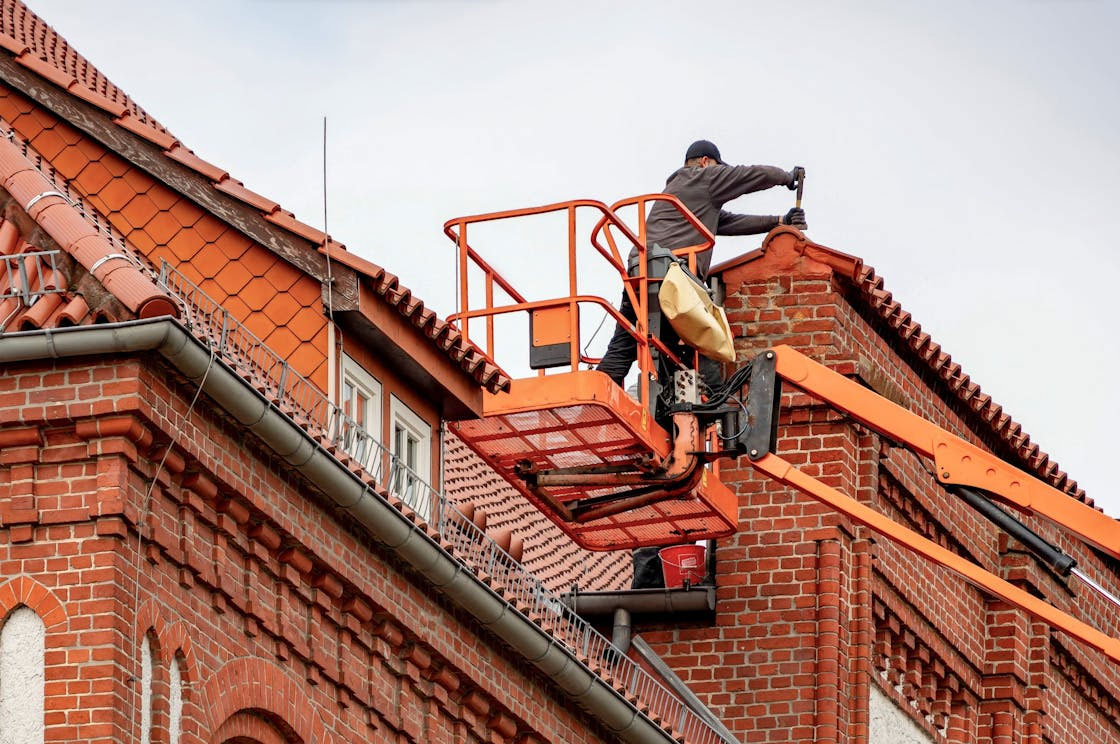
Success Story: Transforming An Old Roof Into A Modern Marvel
The story of a family who turned an old roof that was failing for 28 years into an energy-generating asset that is storm-resistant and resilient – and what every homeowner could take away from their experience
The majority of homeowners take care of their roof like the majority of people take care of their healthThey ignore it when something does go wrong and then regret not having been more attentive earlier. For the family of Calloway in suburban Atlanta The moment of reckoning was the morning of a Tuesday in March, when their daughter spotted a dark spot that was forming on the ceiling of their bedroom in the wake of two heavy days.
The subsequent journey that started out in anger and culminated in the complete transformation of their roof that their house is the most energy-efficient home on their street. It also produces enough solar energy to almost completely eliminate their monthly energy bill, and also has the resilience rating that allows them for a substantial reduction in the cost of homeowner’s insurance.
Their story isn’t one of an unlimited budgets or exceptional circumstancesit’s one of informed decision-making the right contractor-partnership, and the willingness to see any necessary repair as a chance instead of merely an expense. to unlocking the secrets of human behavior is the story of how it all took place.
The Wake-Up Call: Assessing 28 Years of Deferred Reality
The home, called Calloway, was constructed in 1997. The roofing was originally made of asphalt and had not been replaced. Twenty-eight years old, it was older than the upper limit of a three-tab shingle’s life expectancy by many years. This was an aspect that the family was aware of but had not realized, partly because the roof hadn’t clearly been damaged, and also because the thought of a major roofing job was overwhelming and costly.
The stain on the ceiling changed the equation instantly. They contacted three roofing contractors to conduct an assessment. They all arrived within forty-eight hours and shared the same information that the shingles were depleted in granules. This means the UV-protective coating which gives asphalt shingles their weather-proofing had been eroded to the point of complete ineffectiveness. The decking underneath had absorbed water in at least four spots near roof penetrations, where the old caulk allowed the infiltration of water over several seasons.
Three of the contractors suggested a simple, like-forlike replacement of new thirty-year architectural shingles atop decking that was replaced that could be installed in a week at costs between fourteen thousand and 17000 dollars. A third professional, who is a certified roofing expert called Marcus Webb whose company had been in operation for nearly nineteen years, provided a unique perspective to the conversation.
The Turning Point: A Contractor Who Asked Different Questions
Marcus Webb spent three hours at the home of Calloway much longer than the two other contractors, who were able to complete their assessments in less than forty minutes. Webb examined not only the roof’s surface but also the insulation in the attic, the ventilation system gutters, fascia and soffit.
He offered the family a series of inquiries that none other contractors has addressed: How much were they paying for summer electricity bills? Are they planning to remain in their home for a long time? Did they have any experience with large thermal transfer across the ceiling during the summer?
Are they aware of the solar tax credit offered by the federal government as well as the Georgia Power net metering program? The answers provided by the Calloway family reveal an unsatisfactory home energetically in a variety of dimensions at the same time.
The electricity bills for summer often exceed three hundred dollars per month, largely due to an old HVAC system that was working against an attic which regularly was a temperature of 150 degrees Fahrenheit because of inadequate ventilation and the dark, thermally absorbing roof shingles.
Marcus described a roof transformation that would address not only the immediate need for replacement but also the entire energy and thermal profileHe also presented an extensive financial analysis demonstrating the ways in which modernized material and integration of solar will repay within about seven-to-9 years via the savings from utility bills and insurance benefits that would then yield net positive returns over the remainder of your roof.
The Scope: Building a Roof Designed for the Next Thirty Years
Following a full week’s study and multiple discussions with Marcus and a meeting with their accountant on tax implications after which the Calloways agreed to a complete roofing project that included four elements. The foundation of the project was complete roof deck replacement with seven-sixteenths-inch OSB sheathing throughout, replacing the original boards and three sections of moisture-damaged decking identified during the assessment.
The new deck was covered with an entire layer of self-adhering water shield and ice was laid over the entire roof rather than only at the eaves – an option Marcus suggested due to the Atlanta region’s growing number of severe storms. The main roofing surface of the roof covering two-thirds of it comprised GAF Timberline HDZ architectural shingles with an impact resistance of Class 4 rating and a reflective solar granule that has an Energy Star certification.
On the rear slope that faces south — which is the best solar exposure for their home’s orient Marcus’s crew put up GAF Timberline Solar shingles across the entire slope that integrated the photovoltaic capabilities directly onto the roof surface, without the need for any mounting hardware. In the attic, the ventilation systems were revamped using continuous ridge vents and a an intake system for the soffit to replace the insufficient static vents that caused the high summer temperatures in the attic.
The total cost of the project before incentives was $38,000, five hundred dollars – around twenty thousand dollars more than the cheapest traditional replacement quote they received.
The Incentives: How the Financial Picture Changed Dramatically
The project’s total cost was substantial However, Marcus had arranged the Calloways properly for the incentive landscape which will significantly reduce their investment net. Federal Investment Tax Credit, applied to the solar roofing component in the construction, provided 30% of their solar installation costs as directly credited against their federal tax bill which was about seven thousand, 200 dollars that was applied to their tax return.
The insurance company for their homeowner, State Farm, offered an increase of 14 percent in their premium to install Class 4 impact-resistant shingles -which is a savings of around 288 dollars per year which will increase over the duration of their policy.
Georgia Power’s net-metering program that credits excess solar power at retail electricity prices according to Marcus’s energy model, which will result in an average monthly credit of between one hundred sixty and 200 dollars during the high summer where the power output from their systems is at its highest as well as their cooling demands create the highest demands for offset.
The Calloways also provided financing for a part of the project with the PACE (Property assessed Clean Energy) loan, which is the financing method that allows improvements to energy efficiency to be repaid by assessment of property taxes, offering advantageous interest rates while maintaining their credit capability as they have always been.
The net cost of their project which included the finance structure and tax credits was around 24000 dollars and their payback calculated based on the total savings from utility and insurance of the rate of eight years four months.
The Installation: Five Days That Changed the Home
Marcus’s team of eight people was on the job for a weekday in October, a time carefully chosen to make use of Atlanta’s mild temperatures in the fall and low probability of precipitation. The underlayment and shingles were taken off and removed the first day, with the decking pieces that were damaged identified and tagged to be replaced.
The new decking as well as the complete water shield and ice was laid down on the second day. The traditional shingle sections on the side and front slopes were finished on day three, and the more technically challenging solar-powered shingle construction on the slope facing south that took three days to complete.
The roof vent system, gutters as well as all trimming and flashing were finished on day five. Marcus completed a walk-through inspection of homeowners in the evening of the fifth day in which he pointed out all the components of the project, describing the warranty documents for each item, and explaining the monitoring application which would show their solar generation statistics in real-time.
Electrical connections to the grid of Georgia Power managed by an electrician licensed to work with Marcus’s team was completed and checked in the next week. After the system was put into operation the monitoring application showed that the roof at Calloway was producing 4.2 Kilowatts of power by midday. This was enough to power the entire house and send excess energy back into the grid.
The Results: Twelve Months Later
12 months following the program’s end The Calloways revealed their actual performance information. Their average monthly electric bill was reduced from 247 dollars to just twenty-two dollarsnet-metering credits covering the majority of their usage during the fall and spring months, and cutting their summer costs to only a tiny fraction of their former amounts.
The temperature of their attic in summer that was measured using the wireless thermometer they put in to test the waters, peaked at one seven and a half degrees Fahrenheit during the scorching week of July. This was 43 degrees lower than the temperature before the renovation, a reflection of the solar shingles’ less heat absorption as well as the new ventilation system’s increased airflow.
The home was able to withstand two major hail storms — one of which was reported to have golf ball-sized hail without having a single shingle damaged and a feat that neighbors with traditional roofs couldn’t claim. The home was valued for refinancing October, their appraiser attributing an increase of forty-one thousand dollars in value for the solar roof by itself that was greater than the amount needed to cover the cost of the project in the equity position of the house within one year.
We wish we’d done it in the past ten years and we would have done it now,’ the homeowner stated. “But now we understand the reason we needed someone to explain the possibilities before we could even see the possibilities for ourselves.’
What Every Homeowner Can Take From This Story
The transformation of the Calloway family’s roof provides lessons for homeowners in all climates and at every level of budget. The replacement of your roof isn’t simply a matter of maintenance it’s an important decision over the next 30 years regarding the energy efficiency and climate resilience. It is also a decision about the value of your home that requires the type of careful thoughtful, well-informed consideration that the majority of homeowners save for smaller purchase.
A contractor who asks a variety of questions and offers an overall view of your roof’s condition is more valuable than a contractor who offers you the most efficient, least expensive offer. The incentives that are available for solar-powered and energy-efficient roofing through 2026 are significant enough to change the financial equation for homeowners who are willing to fully understand the benefits.
The roof your home is entitled to and that safeguards and generates energy, is efficient, and is durable is within the reach for more homeowners than the price tag alone suggests. The stain on the ceiling that frightened the Calloways turned out be the start of something that was far more than the one it was replacing.
Note: The home owners that are featured in this article are part of a composite narrative that was created for illustration purposes. Names, addresses and other identifying information are fictional. Energy savings, financial figures and the performance of the product represent real-world outcomes reported in the field. The results vary depending on the conditions of your home such as climate, temperature and utility rates as well as the quality of the installation. Always consult a licensed professional prior to making major roofing decisions.